.png)

Why Your New Texas Hill Country Yard Is Washing Away (And How to Fix It with Stone)
- NatureWorks

- Apr 22
- 6 min read
By NatureWorks By Design


What’s Happening to Your Yard (And How to Fix It the Right Way)
If you’ve recently built a home in the Texas Hill Country such as the towns of Spring Branch, Canyon Lake, Blanco amongst many others, you’ve probably noticed something after your first few rains:
Your yard doesn’t behave the way you expected.
Water starts collecting in certain areas, cutting small paths through soil, or moving across your property in ways that weren’t obvious during construction. What looked like a clean, level lot now has very clear drainage patterns.
That’s normal.
New construction changes the land more than most people realize. Grading shifts, soil gets disturbed, and vegetation that used to slow water down is removed. Once rain hits, the property starts showing you how water actually wants to move.
At NatureWorks By Design, we design and install landscapes around those patterns, using materials that manage water instead of fighting it.
Why Drainage Becomes an Issue After Building
Most drainage problems on new homes come down to a few factors:
Soil has been disturbed and isn’t fully settled
Natural runoff paths have been altered
There’s little to no established root system to absorb water
Compaction varies across different areas of the lot
So instead of evenly absorbing rain, water tends to move quickly and concentrate in certain spots.
That’s when you start seeing:
Pooling near the foundation
Erosion along slopes or edges
Mud trails forming across the yard
Rock or mulch shifting after storms
The goal isn’t to stop water, it’s to control where it goes and how it behaves.
Materials That Actually Work for Residential Drainage:
Not all landscaping materials are built for drainage. Some are purely aesthetic, while others are designed to handle water flow over time.
Here’s what we commonly use and why.
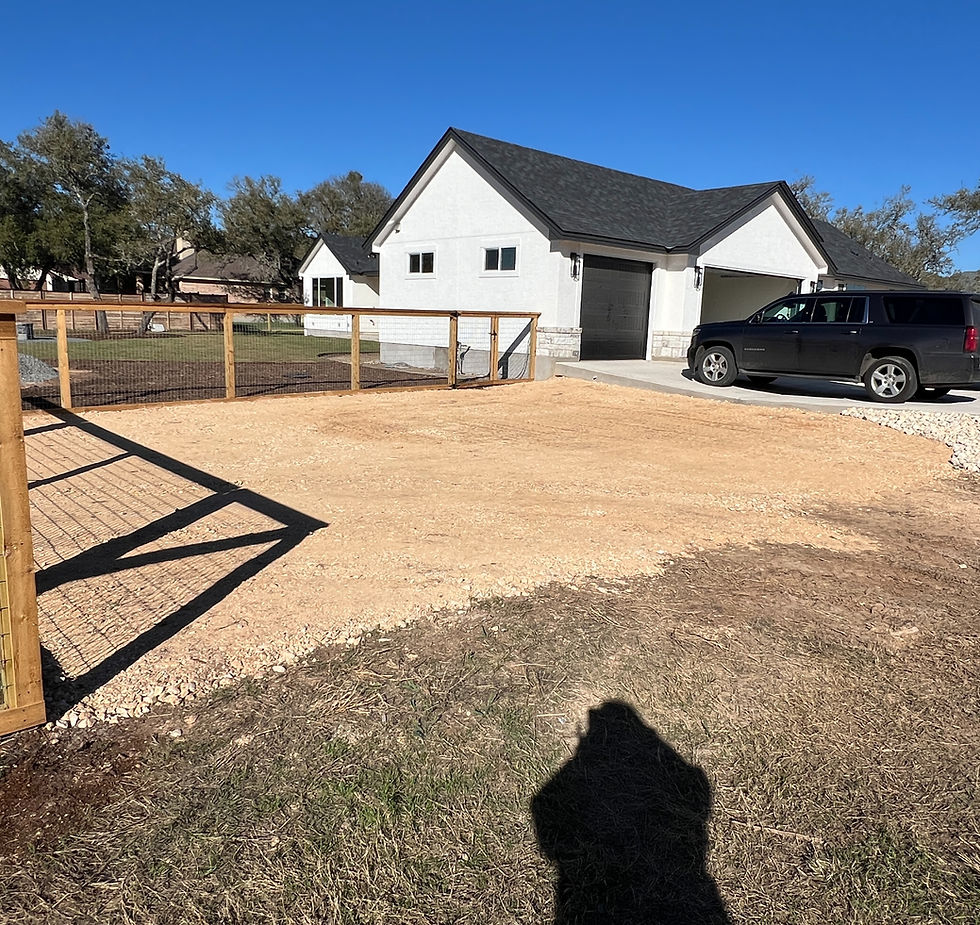
White Washed Limestone: Stable and Clean for Utility Areas
White washed limestone is a compactable material often used for parking pads, drive extensions, and access areas.

Why it works:
Packs down into a stable surface
Allows for light water permeability
Holds up under vehicle traffic
Keeps a clean, consistent appearance
Best uses:
RV or boat parking
Side yard access paths
Overflow parking areas
It’s not meant for areas with active water flow, but it performs well where you need structure without creating drainage problems.
White Washed Limestone Gravel Installation Examples:


Retaining Walls with Limestone Butter Blocks: Controlling Grade & Locking in Your Drainage System

When a property has significant elevation changes or large cutouts, drainage isn’t just about surface materials anymore. At that point, you’re dealing with grade control, and that’s where retaining walls come in.
In the Texas Hill Country, one of the most effective and natural-looking options is limestone butter block retaining walls.
Why Limestone Butter Blocks Work
Limestone butter blocks aren’t just chosen for appearance. They’re used because they perform.
Heavy and stable – ideal for holding back large volumes of soil
Natural fit for Hill Country homes – matches the surrounding environment
Long lifespan – holds up well against moisture and weather changes
Clean, structured look – without feeling overly manufactured
When properly installed, these walls don’t just “hold dirt.” They control the entire grade of your property, which directly impacts how water moves.
Pairing Retaining Walls with Erosion-Resistant Rock
A retaining wall by itself isn’t a complete drainage solution. It’s one piece of the system.
To make it work long-term, it needs to be paired with materials that handle water movement at the base and surrounding areas.
Large Limestone Bull Rock
This is your first line of defense against erosion near retaining walls.
Handles heavy water flow
Prevents soil washout at the base of the wall
Stays in place due to size and weight
River Rock (2”–4” or Larger)
Used in transition zones and drainage paths:
Allows water to pass through without disturbing soil
Reduces splash erosion
Creates a more finished, natural appearance
How It All Works Together
When done correctly, this isn’t just a wall with rock around it. It’s a complete erosion control system.
The retaining wall holds and defines the grade
The bull rock absorbs and slows heavy water movement
The river rock manages flow and protects surrounding areas
Instead of water cutting around or undermining your structure, it’s contained, slowed, and redirected.
Why This Matters for New Construction
Large cutouts and steep grading are common after building in areas like Spring Branch, Canyon Lake, and Blanco and many more.
Without proper reinforcement:
Soil begins to shift over time
Water accelerates erosion at the base
Edges start to break down after repeated storms
And once that starts, it doesn’t fix itself.
Installing a properly built retaining system with the right supporting materials prevents that from happening in the first place.
Butter Block Limestone Retainer Wall Installation Examples:


Rip Rap Limestone: Built for Heavy Water Flow

Rip rap is large, angular limestone used for erosion control and high-flow drainage areas.
Why it works:
Slows down fast-moving water
Prevents soil from washing away
Interlocks to stay in place over time
Best uses:
Drainage channels and swales
Sloped areas with runoff
Erosion-prone sections of the property
When water is consistently moving through an area, this is one of the most reliable solutions available.
Rip Rap Limestone Installation Examples:


River Rock: Functional Drainage with a Natural Look

River rock can be both aesthetic and functional when installed correctly.
Why it works:
Allows water to pass through while protecting the soil underneath
Reduces erosion from surface runoff
Blends well with natural landscapes
Best uses:
Dry creek beds
Around downspouts
Low-lying drainage zones
Proper sizing and depth are key. When done right, it stays in place and performs long-term.
River Rock Installation Examples:
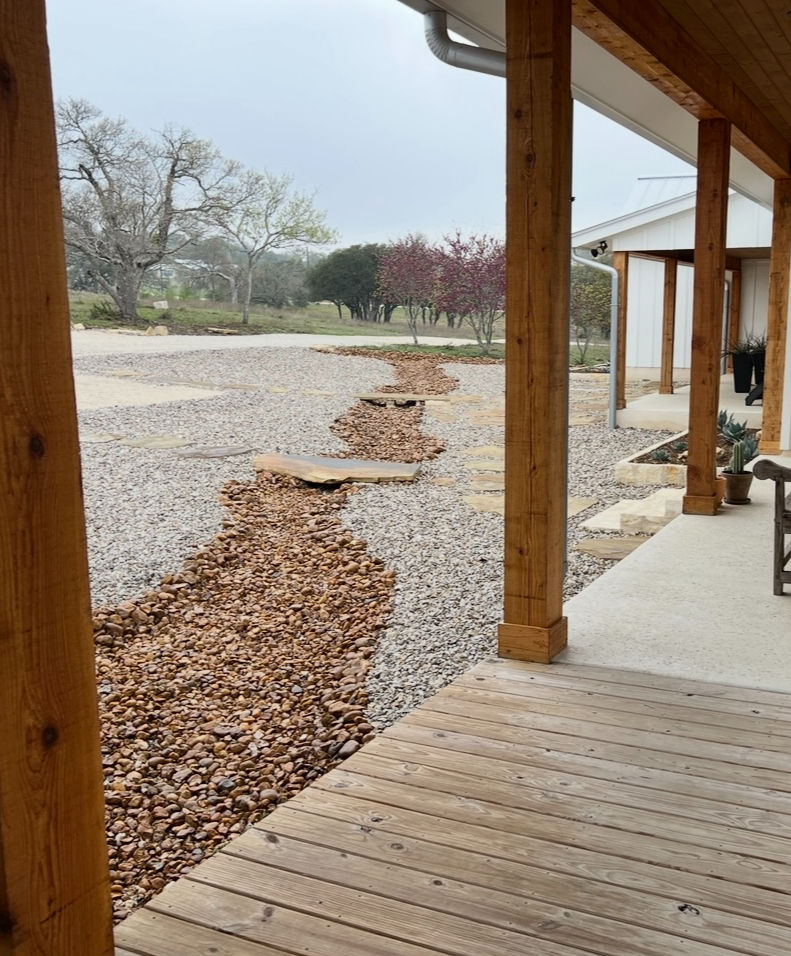


Walkways in Drainage Areas: A Better Alternative to Concrete Sidewalks
One of the most common issues we see are concrete sidewalks poured through natural runoff areas. Over time, this can lead to cracking or undermining as water continues to move beneath or around it.
A more effective solution:
Flagstone set into river rock or larger gravel, or individually poured Concrete Pads
Why it works:
Water flows through the system instead of being blocked
Flagstone provides a solid walking surface
Surrounding rock helps absorb and redirect runoff
Less risk of long-term structural issues
This approach works especially well for side yards, backyard access paths, and areas where drainage and usability need to coexist.
Walkway Installation Examples:


Water Runoff: Should You Change the Flow Direction or Build Around it?
Designing Around Water Instead of Against It
Every property is different, but the approach stays consistent:
Identify how water naturally moves across the land
Reinforce those paths with the right materials
Slow water down where needed
Protect soil and structures from erosion
Trying to block or ignore water typically leads to more problems over time. Working with it creates a system that lasts.
Drainage & Landscaping Services We Offer in Spring Branch, Canyon Lake, Blanco and surrounding rural towns:
At NatureWorks By Design, we focus on building landscapes that hold up in real conditions, not just right after installation.
That includes:
Material selection based on function and durability
Layouts designed around your property’s natural grading
Long-term solutions that reduce maintenance and repair
If you’re starting to notice drainage patterns on your property, that’s the right time to address them before they turn into larger issues.
Final Thought
Water will always find a path. The key is deciding whether that path works for your property or against it. Using the right materials in the right places makes that difference.
NatureWorks By Design
Custom Drainage & Landscape SolutionsServing Spring Branch, Canyon Lake & Blanco, Texas

Comments